

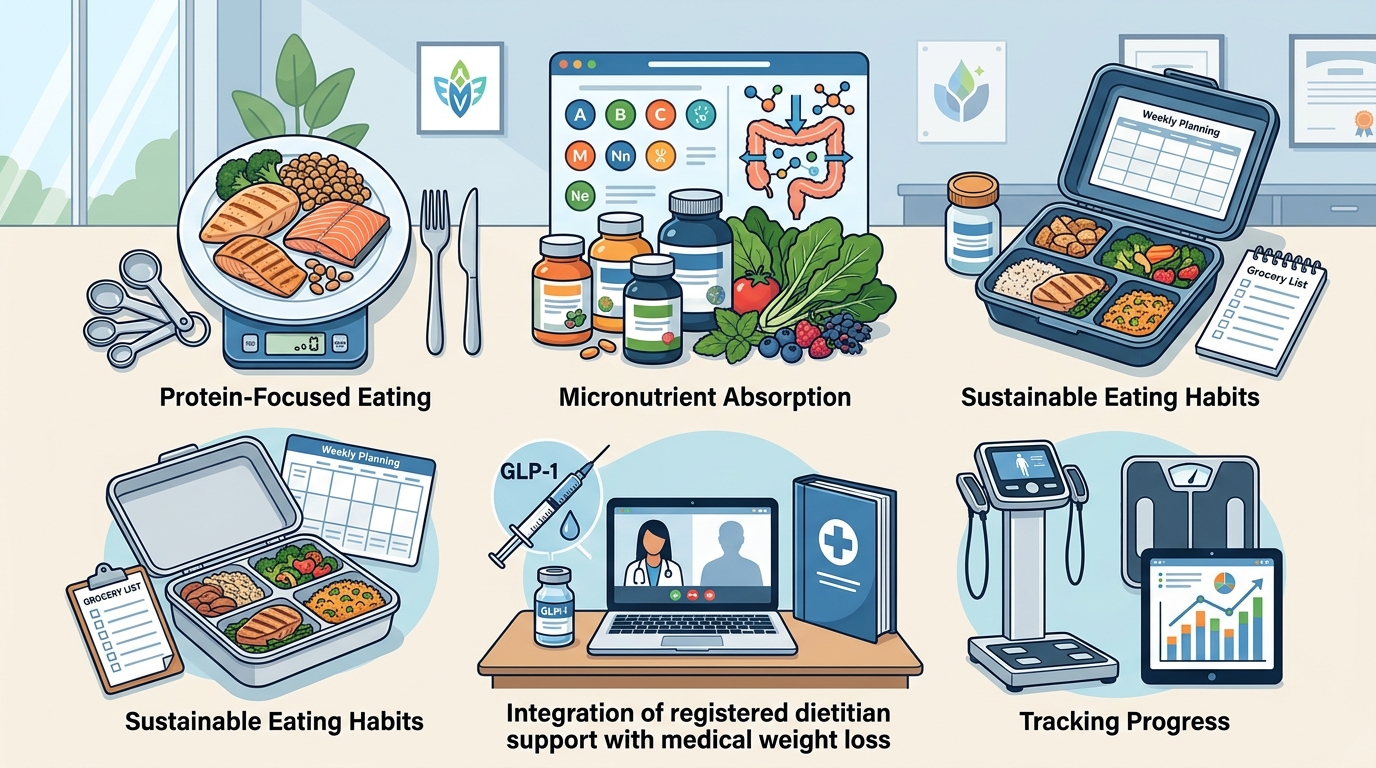
Starting a GLP-1 medication like semaglutide or tirzepatide changes how your body processes food and manages hunger. Without proper nutritional guidance, patients often struggle with protein intake, micronutrient absorption, and sustainable eating habits. Bright Medical Wellness in Edina, Minnesota, integrates registered dietitian support into its medical weight loss programs to ensure you get the most out of your treatment. This guide outlines five key approaches to dietitian-led nutrition that complement GLP-1 therapy in the Twin Cities area.
1. High-Protein Meal Planning for Muscle Preservation
Preserving lean muscle mass is the primary goal of this program. GLP-1 medications can reduce appetite significantly, which sometimes leads to insufficient protein intake. A registered dietitian helps you identify high-quality protein sources that fit your new, reduced portion sizes. This ensures that the weight you lose is primarily fat, not muscle, maintaining your metabolic rate and physical strength.
2. Micronutrient Monitoring and Supplementation
Preventing nutrient deficiencies is critical when caloric intake drops. Reduced food volume can lead to gaps in essential vitamins and minerals. Dietitians work with your care team to monitor your blood work and recommend specific supplements or dietary adjustments. This proactive approach prevents common issues like fatigue or hair thinning that can arise from poor nutrient absorption during rapid weight loss.
3. Behavioral Coaching for Sustainable Habits
Changing long-term eating behaviors is more effective than short-term restriction. Dietitians provide coaching on mindful eating, emotional triggers, and portion control. This psychological support helps you build a relationship with food that lasts beyond the active phase of medication. By addressing the root causes of overeating, you are better prepared for maintenance after your treatment concludes.
4. Digestive Comfort and Symptom Management
Managing gastrointestinal side effects is a key part of nutritional care. Many patients experience nausea, constipation, or bloating when starting GLP-1s. A dietitian can suggest specific food textures, hydration strategies, and meal timing to alleviate these symptoms. This practical advice helps you stay consistent with your medication and nutrition plan without discomfort.
5. Maintenance Phase Transition Planning
Preparing for life after the active treatment phase is essential for long-term success. Dietitians help you develop a realistic eating plan for when you step down from medication or reach your goal weight. This includes strategies for managing increased appetite and preventing weight regain. By planning ahead, you create a sustainable lifestyle that supports your health long-term.
Choosing the Right Nutrition Support
Selecting the right nutrition program depends on your specific health goals and how your body responds to medication. If you are struggling with muscle loss, prioritize high-protein planning. If you are experiencing digestive issues, focus on symptom management. At Bright Medical Wellness, our clinicians coordinate with nutrition partners to create a holistic plan that addresses your unique needs. You can explore our nutrition program options to see how we integrate these strategies into your care.
Frequently Asked Questions
Do I need a separate dietitian if I am on a GLP-1 program?
While many medical programs include basic dietary advice, working with a registered dietitian provides specialized, evidence-based guidance. Dietitians can tailor nutrition plans to your specific metabolic needs and medication side effects, which general advice may not cover.
How often should I meet with a dietitian during GLP-1 treatment?
Most patients benefit from monthly check-ins during the active treatment phase. However, the frequency can vary based on your progress and specific challenges. Your care team at Bright Medical Wellness will recommend a schedule that fits your needs.
Can a dietitian help with nausea from GLP-1 medications?
Yes, dietitians can offer practical strategies to manage nausea, such as eating smaller, more frequent meals and avoiding greasy or spicy foods. These adjustments can significantly improve your comfort and adherence to the medication.
What is the role of a dietitian in preventing weight regain?
Dietitians help you develop sustainable eating habits and coping strategies for when you reduce or stop medication. They focus on behavioral changes and realistic meal planning to support long-term weight maintenance.