

The best strategy for keeping weight off after finishing GLP-1 medication in Minnesota is a structured transition plan that combines gradual dose reduction with intensive behavioral habit formation. At Bright Medical Wellness, we emphasize that medication is a tool, not a permanent crutch. Success depends on building a sustainable lifestyle foundation before you stop the drug entirely.
Understanding the Physiology of Weight Regain
Weight regain is a biological response, not a moral failure. When you stop GLP-1 agonists like semaglutide or tirzepatide, your body often reverts to its previous set point. Metabolic adaptation is the process where your body lowers its energy expenditure to maintain a specific weight. This biological drive makes it difficult to maintain weight loss without active intervention.
Research indicates that appetite signals return rapidly after discontinuation. Patients often report a surge in hunger and cravings within days of stopping. Understanding this mechanism is the first step in preventing regain. It shifts the focus from willpower to strategy.
At Bright Medical Wellness, we monitor these physiological shifts closely. We use data to anticipate when your appetite might spike. This proactive approach allows us to adjust your plan before weight creeps back on.
The Critical Role of Behavioral Habit Formation
Medication suppresses appetite, but it does not teach you how to eat. Behavioral habit formation is the practice of creating automatic, positive responses to food cues. If you rely solely on the medication to control intake, you may not have developed the skills to manage hunger independently.
During your treatment, you must actively practice eating without the medication's help. This means scheduling regular meals and practicing mindful eating. You need to learn how to recognize true hunger versus emotional eating. These skills become your safety net when the medication is removed.
Our clinicians work with you to identify your specific triggers. We create a personalized action plan for high-risk situations. This ensures you have a clear path forward when the drug is no longer suppressing your appetite.
Gradual Tapering vs. Abrupt Cessation
Stopping medication abruptly is rarely the best approach. Gradual tapering is a method where you slowly reduce the dose over time. This allows your body to adjust to lower levels of the drug. It also gives you time to test your new habits in a controlled environment.
For example, a patient might stay on a maintenance dose for several months before stopping. This period is crucial for solidifying new behaviors. It allows you to see how your body responds to a lower dose. If weight stabilizes, you can proceed with confidence.
Building a Sustainable Lifestyle Framework
Long-term success requires a lifestyle that supports your health goals. Sustainable lifestyle framework is a comprehensive plan that includes nutrition, physical activity, and sleep. It is designed to be maintained for years, not just weeks.
Physical activity is a key component of this framework. Exercise helps preserve muscle mass and boosts your metabolism. It also improves your mood and reduces stress, which can trigger overeating. Aim for a mix of strength training and cardiovascular exercise.
Nutrition should focus on whole, nutrient-dense foods. This approach provides lasting satiety and supports overall health. We help you create a meal plan that you enjoy and can stick to. This makes the transition off medication much smoother.
Monitoring and Ongoing Support in Minnesota
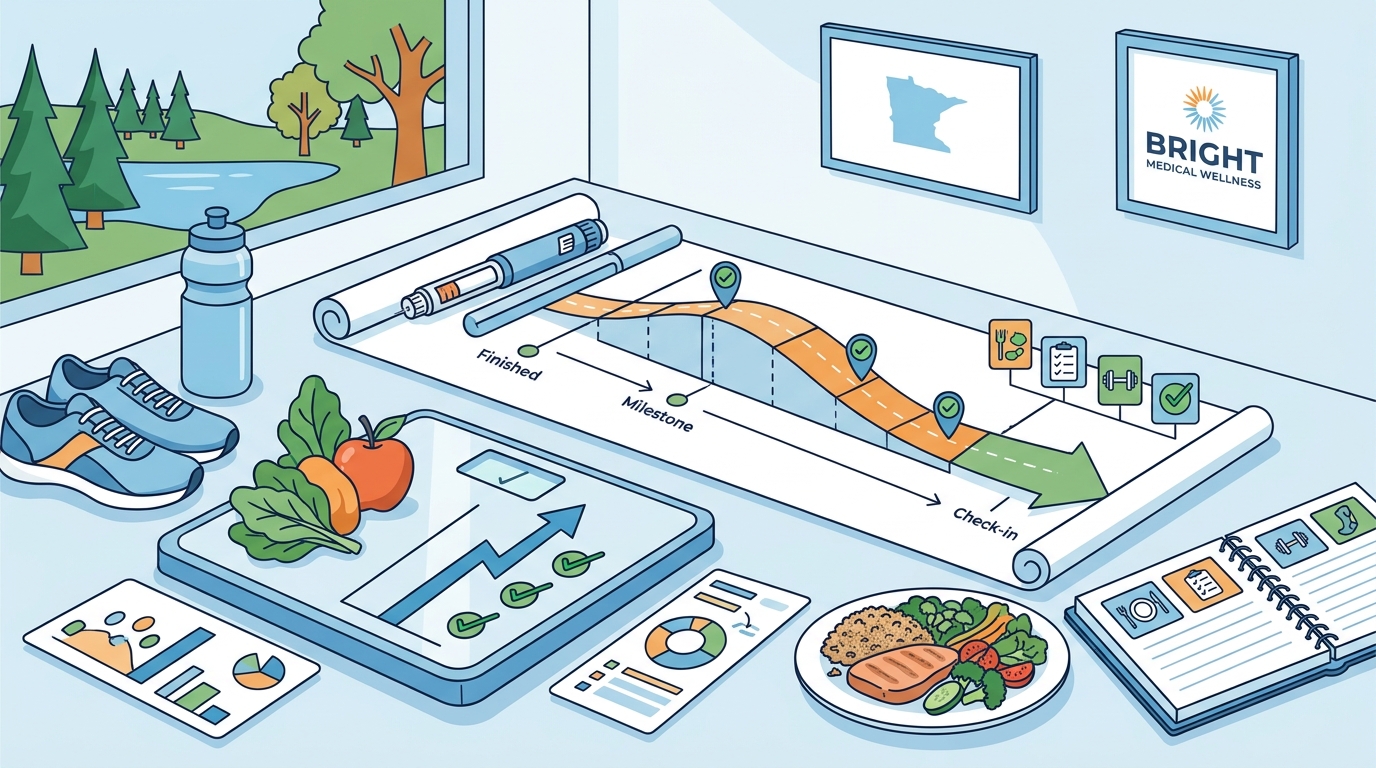
Monitoring your progress is essential for catching issues early. Continuous monitoring is the practice of regularly tracking your weight, body composition, and health markers. This data provides objective feedback on your progress.
We also offer comprehensive health panels to track your metabolic health. These tests provide a detailed view of your internal health. They help ensure that your weight loss is not compromising other aspects of your well-being.
Key Takeaways
- Weight regain is a biological response driven by metabolic adaptation and appetite signals.
- Behavioral habit formation is critical for managing hunger without medication.
- Gradual tapering allows your body to adjust and tests your new habits.
- A sustainable lifestyle framework includes nutrition, exercise, and sleep.
- Continuous monitoring helps catch issues early and ensures long-term success.
- Ongoing support from a medical team is vital for navigating the transition.
Frequently Asked Questions
How long should I wait before stopping GLP-1 medication?
There is no single answer, as it depends on your individual progress and goals. Many patients stay on a maintenance dose for several months to a year. Your clinician will guide you based on your specific situation.
Will I regain all the weight I lost if I stop?
Not necessarily. If you have built strong habits and a sustainable lifestyle, you can maintain most of your weight loss. However, some regain is common, and monitoring is key to minimizing it.
Can I use GLP-1 medication intermittently?
Some patients use a