
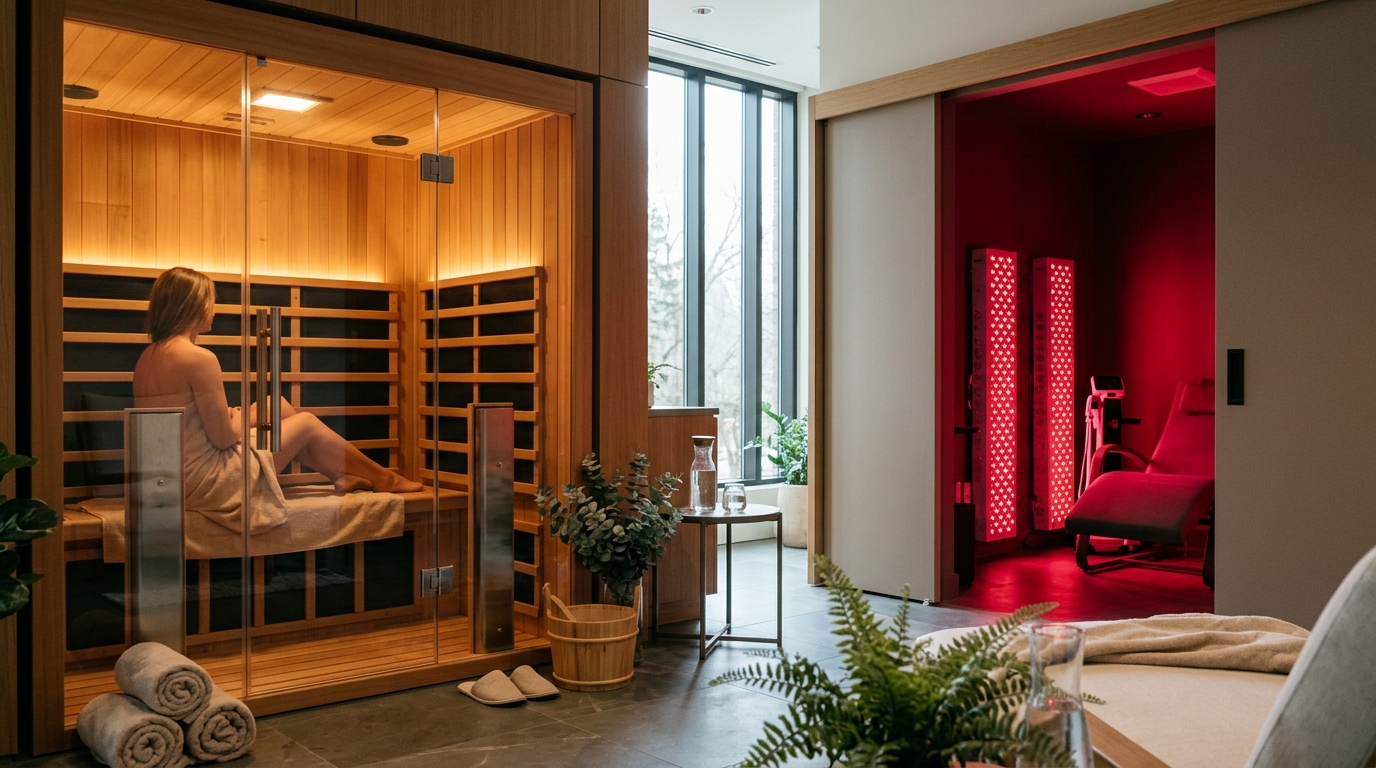
Choosing between infrared sauna and red light therapy in Edina depends on your specific recovery goals. Infrared sauna is better for whole-body relaxation, heat-induced circulation, and passive recovery. Red light therapy is superior for targeted tissue repair, muscle inflammation, and cellular energy production. Bright Medical Wellness offers both modalities, allowing you to select the treatment that aligns with your immediate physical needs.
Infrared Sauna for Whole-Body Recovery
Infrared sauna is a thermal therapy that uses infrared light to penetrate the skin and raise core body temperature. This heat stimulates blood flow, which helps deliver oxygen and nutrients to muscles while flushing out metabolic waste. The passive nature of the treatment makes it ideal for general fatigue and stress relief.
Strengths of Infrared Sauna
The primary strength of infrared sauna is its ability to promote deep relaxation. The heat triggers the release of endorphins, which can reduce perceived pain and improve sleep quality. It is a low-effort recovery tool that requires no active movement from the user.
Limits of Infrared Sauna
Infrared sauna is not a targeted treatment. It affects the entire body uniformly, which means it cannot focus on a specific injured muscle or joint. Additionally, the heat may not be suitable for individuals with certain cardiovascular conditions or temperature sensitivities.
Who It Suits
This option suits individuals seeking general wellness, stress reduction, and passive recovery after light to moderate activity. It is a popular choice for those who want to improve circulation and sleep without engaging in active physical therapy.
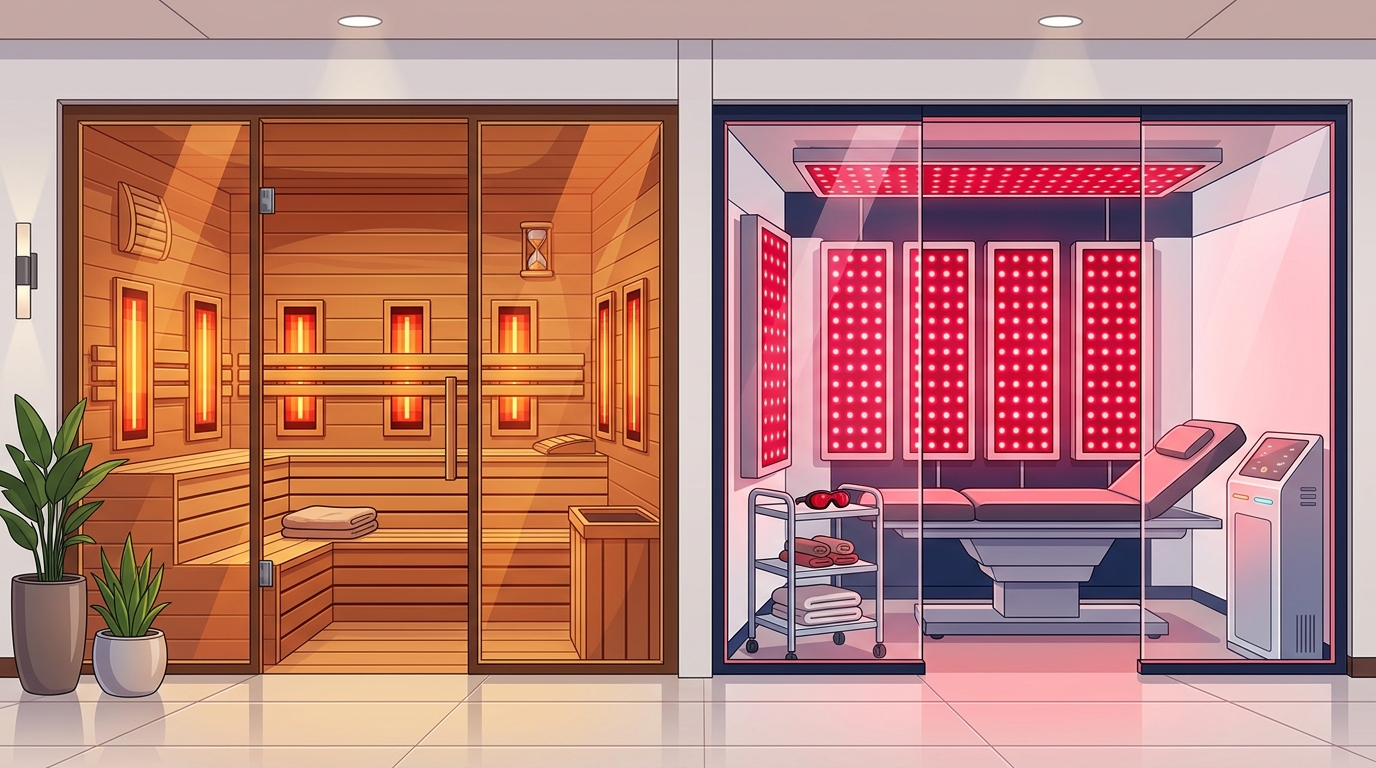
Red Light Therapy for Targeted Repair
Red light therapy is a photobiomodulation treatment that uses specific wavelengths of light to stimulate cellular function. It works by increasing adenosine triphosphate (ATP) production in mitochondria, which provides cells with the energy needed for repair. This mechanism makes it highly effective for localized tissue damage.
Strengths of Red Light Therapy
The key strength of red light therapy is its precision. It can be applied directly to injured areas, such as a strained hamstring or a sore shoulder. The treatment is non-invasive and generally has no downtime, allowing users to return to their daily activities immediately.
Limits of Red Light Therapy
Red light therapy is less effective for whole-body relaxation compared to heat therapy. It does not induce the same level of passive rest or endorphin release as a sauna session. Users must actively position the light panels or devices on the target area.
Who It Suits
This option suits athletes, active individuals, and anyone dealing with specific muscle strains, joint pain, or skin concerns. It is the preferred choice for those looking to accelerate healing of a particular injury.
Comparison of Recovery Modalities
| Criteria | Infrared Sauna | Red Light Therapy |
|---|---|---|
| Primary Mechanism | Thermal heat and vasodilation | Photobiomodulation and ATP production |
| Target Area | Whole body | Localized or specific regions |
| Recovery Focus | Relaxation, sleep, circulation | Tissue repair, inflammation, pain |
| Active Effort | Passive (sitting/lying down) | Passive (positioning required) |
| Best For | General wellness and stress | Specific injuries and muscle soreness |
Choosing the Right Option for Your Needs
Selecting the right recovery tool requires an honest assessment of your current physical state. The following guidance helps you match the modality to your specific situation.
Choose Infrared Sauna If
You are feeling generally fatigued, stressed, or tense. You want to improve sleep quality and overall circulation. You have completed a workout and want to cool down and relax without focusing on a specific pain point.
Choose Red Light Therapy If
You have a specific injury, such as a pulled muscle or joint pain. You are an athlete looking to accelerate recovery from intense training. You want to address skin concerns or localized inflammation without heat exposure.
Integrating Both for Optimal Results
Many individuals find that combining both treatments yields the best outcomes. A common protocol involves using red light therapy on a specific injury first, followed by an infrared sauna session for whole-body relaxation. This approach addresses both the local repair needs and the systemic stress response. At Bright Medical Wellness, clinicians can help you design a personalized recovery plan that integrates these modalities effectively.
Frequently Asked Questions
Can I use red light therapy and infrared sauna on the same day?
Yes, you can use both on the same day. Many people prefer to use red light therapy first to target specific areas, then follow up with an infrared sauna for relaxation. There is no known negative interaction between the two treatments when used as directed.
Is red light therapy better than sauna for muscle soreness?
Red light therapy is generally more effective for targeted muscle soreness because it directly stimulates cellular repair in the affected area. Infrared sauna helps with general soreness by improving circulation and relaxation, but it is less precise for specific muscle strains.
How often should I use these treatments for recovery?
Frequency depends on your individual needs and the severity of your condition. For general wellness, 2 to 3 sessions per week is common. For active recovery from intense training, daily use of red light therapy on target areas may be beneficial. Always follow the guidance of your healthcare provider.
Do I need a prescription for red light therapy or sauna?
No, you do not need a prescription for either treatment. Both are considered wellness therapies and are available for general use. However, consulting with a clinician at Bright Medical Wellness can help ensure the treatments are appropriate for your specific health history.
Which treatment is better for sleep improvement?
Infrared sauna is typically better for sleep improvement. The heat and relaxation induced by the sauna can help lower cortisol levels and promote a state of calm that is conducive to sleep. Red light therapy is less directly linked to sleep regulation, though it may help indirectly by reducing pain and stress.
Start Your Recovery Journey
Whether you choose infrared sauna or red light therapy, the key is consistency and personalization. Bright Medical Wellness provides the expertise and equipment to help you achieve your recovery goals. To begin, book a free consultation to discuss which modality best fits your current needs. Learn more: Contact Bright Medical Wellness.